Satin fabric price per yard: compare the specification
A price is useful when its unit, fabric identity and delivered scope are clear. This guide describes how to request comparable satin quotations; it publishes no market price or promised saving.
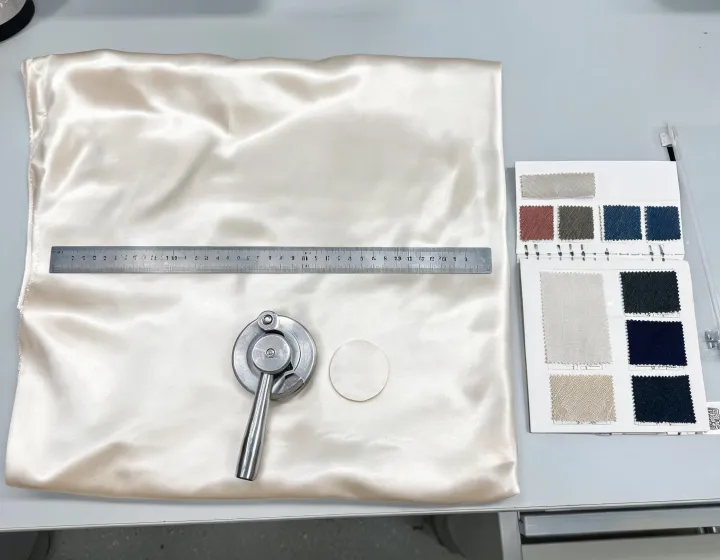
Build one specification record
- Composition and construction
- Write the requested fiber percentages, satin construction and any yarn requirement. Ask for the quoted article code and declare whether substitution is acceptable.
- Weight and width
- State GSM, usable width excluding unusable edges, and agreed tolerances. Confirm measurement and conditioning procedures. Nominal roll width is not automatically usable cutting width.
- Color and finish
- Identify the shade reference, viewing conditions, dye-lot policy and finish. Printed orders additionally need artwork version, repeat dimensions and strike-off approval.
- Quantity and approval
- List quantity per color and total with units, roll-length limits, sampling stages, bulk delivery window and US destination. Keep sample approval distinct from bulk release.
Normalize the yard and the delivered scope
A linear yard is 0.9144 meters. For a hypothetical width comparison, 100 linear yards at 1.50 meters usable width represents 137.16 square meters before cutting loss. This is an arithmetic example, not a supplier specification. Two prices per yard can purchase different usable areas, and garment yield also depends on pattern layout, directional sheen and defects.
| Proposal A / same basis | Proposal B / deviation review |
|---|---|
| Requested composition, GSM and usable width | Mark changed fiber, weight or usable width before comparison |
| Specified finish and approved sample stage | Identify unapproved finish or sample exclusions |
| Goods, setup, samples, packing, freight and duties | Record excluded charges and the delivery basis |
Use evidence at the right level
Choose the relevant test method, edition, threshold, specimen conditioning and exact material reference before assessing a report. A lab dip addresses color; a strike-off addresses print appearance; neither establishes bulk dimensional stability or mechanical performance. Ask the supplier for a report tied to the proposed article and the represented production state.
Higher GSM may improve opacity in one construction while changing drape or cost in another. A lower unit quote may exclude printing setup or offer less usable width. Compare these trade-offs against the actual garment and budget, rather than treating higher weight or lower yard price as a universal improvement.
ASTM's public textile method index provides a reference starting point. Method titles are not test results. Certifications remain proposed-supplier documents requiring scope and exact-item verification.
Request a quote on a defined basis
State your target budget with currency and whether it applies per yard, meter, roll or whole order. Tell us which specification fields may change and which must remain fixed. An existing supplier quotation is not needed to begin.
Describe composition, construction, GSM, usable width, color, finish, quantity, US destination and desired delivery. Include sample approvals and exact-product document needs.